A burglary in commercial premises means far more for the business owner concerned than a mere material loss. Stolen goods, damaged equipment, compromised customer data and the resulting loss of trust can reach existential proportions. Nevertheless, many companies underestimate the risks and rely on outdated or inadequate security measures. This guide shows you how to secure your commercial premises systematically and professionally – from access control through video surveillance to fire protection.
Investment in a holistic security concept is not an optional expense but a business necessity. The cost of a successful burglary typically exceeds the investment in professional security technology many times over. Added to this are reduced insurance premiums, an increased sense of security among employees and customers, and compliance with legal requirements.
Why commercial premises are particularly at risk
Commercial properties are a particular target of burglars for several reasons. The most obvious reason is the higher material value: high-value electronics, cash in tills, stock in storage and expensive machinery make businesses lucrative targets. Added to this is the fact that many commercial premises are completely unoccupied during the night, at weekends and on public holidays – so offenders have considerably more time to operate undisturbed.
According to the German Insurance Association (GDV), German businesses recorded commercial burglary losses of more than 600 million euros in 2025. The average loss per commercial burglary, at over 10,000 euros, is significantly higher than for private burglaries.
Another critical factor is the often inadequate security infrastructure of small and medium-sized enterprises. While large corporations maintain their own security departments, SMEs often rely on a simple lock and perhaps a basic alarm system. Professional burglars know these weaknesses precisely and exploit them deliberately. The good news: even with comparatively modest effort, the security level of commercial premises can be raised considerably.
Access control – who is allowed in, who is not?
Access control is the backbone of every commercial security concept. It is not just about keeping burglars out, but also about controlling and documenting who enters which areas of your business and when. Modern access control systems offer a wide range of options that go far beyond the classic key.
Intelligent door locks and smart locks
Electronic door locks replace the mechanical key with digital authentication methods. The advantage is obvious: keys can be copied, lost or stolen – digital access codes can be changed or deactivated in seconds. For businesses with changing staff, cleaning services or external service providers in particular, this is an enormous security benefit.
Time-controlled access codes
Time-controlled codes allow you to define access rights precisely. The cleaning service, for example, receives a code that is valid only between 8 p.m. and 10 p.m. Outside this window, the code is ineffective. Similarly, you can generate temporary codes for suppliers, tradespeople or visitors that automatically expire after a single use or a defined period.
Biometric access systems
For particularly sensitive areas – such as server rooms, safe rooms or stores with valuable goods – biometric access systems are recommended. Fingerprint scanners, hand-vein readers or facial recognition provide the highest level of security, since biometric features can be neither lost nor copied. The systems now work exceptionally fast and reliably: authentication usually takes less than a second.
Complete logging
Every access event is automatically logged – with timestamp, authentication method used and identity of the person. This complete documentation is not only relevant for security but also for compliance requirements, working-time recording and, in the event of a loss, for cooperation with the insurer and police. The German Chamber of Industry and Commerce (IHK) recommends that all businesses regularly review their access control systems and adapt them to current threat scenarios.
Video surveillance with AI support
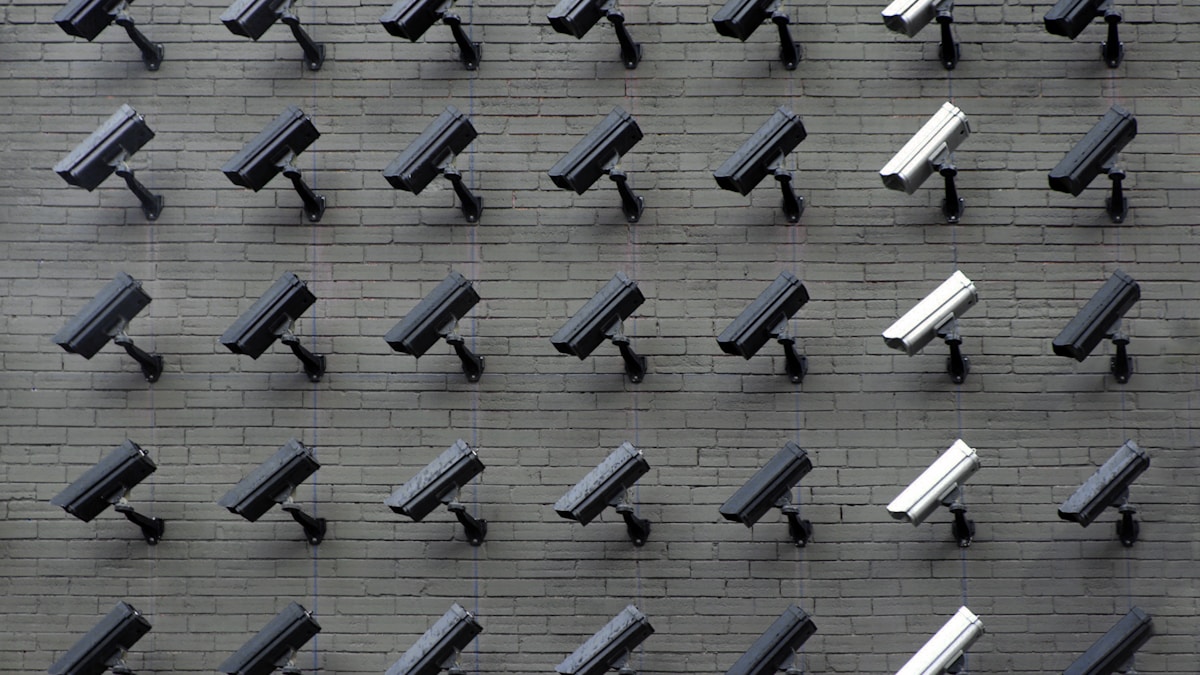
Video surveillance is one of the most effective security measures for commercial premises – both preventively and for clearing up incidents. Modern camera systems have nothing in common with the blurred black-and-white images of earlier days. The current generation works with high-resolution imaging, AI-based motion analysis and intelligent night vision.
AI-based image recognition
Artificial intelligence is fundamentally revolutionising video surveillance. Instead of a security officer having to monitor dozens of camera feeds simultaneously, AI takes over this task reliably and without fatigue. The algorithms detect suspicious behaviour – for example a person loitering in front of an entrance for a prolonged period, or movement in an area that should be deserted at that time of day. False alarms caused by animals, vehicles or weather are reduced to an absolute minimum by the intelligent analysis.
Night vision and 24/7 coverage
Professional commercial cameras feature infrared night vision or starlight technology that delivers razor-sharp colour images even in complete darkness. Combined with wide-angle lenses and motorised pan-tilt functions, it is possible to build a seamless surveillance network without blind spots. Outdoor cameras with weatherproof housings operate reliably at temperatures from minus 30 to plus 60 degrees Celsius.
Cloud storage and remote access
Recordings are stored encrypted in the cloud – safe from tampering and theft. Even if burglars destroy the on-site recording devices, the evidence footage is preserved. Via a smartphone app you have access to live images and recordings at any time and from anywhere. This way you can keep an eye on your business even while on holiday, on business trips or at weekends.
Commercial video surveillance is subject to strict data protection requirements. Employees must be informed, and public areas may only be monitored in a limited way. Protexium provides comprehensive advice on GDPR-compliant installation and signage.
Commercial fire protection – legal obligations and smart solutions
Commercial fire protection is not optional, but a legal requirement. The exact requirements vary depending on industry, building size and type of use, but the basic obligations apply to every business. A fire can not only endanger human life but can also destroy the existence of an entire business. According to GDV, up to 70 per cent of businesses affected by major fires have to file for insolvency within three years.
EN 54-compliant fire alarm technology
The European EN 54 series of standards defines the requirements for fire alarm systems and their components. For commercial premises, compliance with this standard is in many cases mandatory – especially when direct connection to the fire brigade is required. EN 54-compliant systems comprise optical and thermal fire detectors, manual call points, audible signalling devices and a central fire alarm panel that monitors all components and automatically alerts the fire brigade in the event of an alarm.
Automatic fire brigade alerting
For commercial properties above a certain size or with elevated fire risk, direct connection to the fire control centre is mandatory. Modern systems transmit not only the alarm itself but also the exact location of the triggering detector within the building. This allows the fire brigade to locate the source of the fire more quickly and respond in a targeted way. The average response time is reduced by three to five minutes through automatic alerting – a time frame that can make the difference between life and death in a fire.
Industry-specific security tips
Retail: theft and after-hours protection
In retail, two completely different threat scenarios must be addressed. During business hours, shoplifting is the greatest challenge: discreet cameras with AI-based behavioural analysis detect suspicious movement patterns and alert staff in real time. Electronic article surveillance (EAS) systems at the exits complement the protection. Outside opening hours, a complete intrusion detection system with perimeter security, alarm connection and, where appropriate, active defence by security fog takes over. Jewellers, electronics retailers and pharmacies are particularly at risk.
Medical practices and offices: data protection and access control
In medical practices, law firms and offices, the protection of sensitive data is of particular importance in addition to the material protection. Patient records, client files and business secrets must be protected from unauthorised access. Access control systems with authorisation levels ensure that only authorised persons gain access to specific rooms. Server rooms and records rooms should additionally be secured with biometric locks and surveillance cameras. Compliance with GDPR also requires verifiable access documentation.
Hospitality: kitchen fires and water damage
Hospitality businesses face particular challenges: commercial kitchens with fryers, gas and induction hobs are potential sources of fire of the highest order. Grease fire detectors, which respond specifically to the aerosols of overheated cooking oil, are indispensable here. Automatic extinguishing systems above hob and fryer stations can smother a fire at the initial stage. At the same time, the extensive water installations in kitchen and sanitary areas present a significant risk of water damage. Intelligent leakage sensors detect leaks early and can automatically shut off the water supply before greater damage occurs.
Insurance requirements – what your insurer expects
Commercial insurers increasingly impose concrete requirements on the security technology of their policyholders. Those who do not meet these requirements risk, in the event of a claim, a reduction in the payout or even a complete refusal to settle. It is therefore worthwhile to know your insurer's security requirements precisely and to meet them specifically.
EN 50131 certification as a minimum standard
The European EN 50131 standard defines the requirements for intrusion and hold-up alarm systems. Most commercial insurers require at least a Grade 2 system, with Grade 3 or even Grade 4 for higher-value properties or elevated risks. Certification of your system to EN 50131 can also directly affect the level of your insurance premium: premium discounts of 15 to 30 per cent are not uncommon with verified compliance with the standard.
| EN 50131 Grade | Risk level | Typical application |
|---|---|---|
| Grade 1 | Low | Small offices, practices without valuables |
| Grade 2 | Medium | Retail, restaurants, SMEs |
| Grade 3 | High | Jewellers, electronics stores, pharmacies |
| Grade 4 | Very high | Banks, weapon storage, critical infrastructure |
Further insurance benefits
In addition to premium reduction, professional security equipment offers further insurance-related advantages. Many insurers offer special tariffs for properties with monitoring centre connection, video surveillance and access control. Moreover, the complete documentation provided by surveillance systems considerably eases claim settlement in the event of a loss. If you would like to know the precise requirements of your insurer, we recommend a discussion with your insurance advisor combined with a professional security analysis.
Costs and return on investment
The investment costs for a professional security system in a commercial environment vary depending on the property size, industry and desired security level. As a guide, the following benchmark figures can be cited:
- Access control system (10–20 doors): from approximately €3,000 to €8,000
- Video surveillance (6–12 cameras with NVR and cloud): from approximately €4,000 to €12,000
- Intrusion detection system (EN 50131 Grade 2/3): from approximately €3,500 to €10,000
- Fire alarm system (EN 54 with fire brigade connection): from approximately €5,000 to €15,000
- Monitoring centre connection: from approximately €30 to €80 per month
Against these stand potential savings: reduced insurance premiums (15–30 per cent), prevented theft and burglary losses (on average over €10,000 per incident), avoided business interruptions and reduced inventory shrinkage. For most commercial operations the investment in a professional security system pays for itself within 12 to 24 months. The GDV also points out that businesses with modern security technology record on average 40 per cent fewer claims than comparable properties without protective measures.
“Security technology is not a cost centre but an investment that measurably pays off through prevented losses and reduced insurance premiums.”
Conclusion: commercial security is a matter for management
Securing commercial premises requires a carefully considered overall concept that takes all relevant threat scenarios into account. Individual measures such as a single camera or a lock on the front door are no longer sufficient. Only the interplay of access control, video surveillance, intrusion detection and fire protection provides the comprehensive protection that a modern business needs.
Professional planning and implementation are decisive. Every industry has its own risks and requirements, every property its individual vulnerabilities. There is no one-size-fits-all solution – but there is a systematic approach that takes all factors into account. Protexium Security develops a tailored security concept for your business that fulfils both your industry-specific requirements and your insurer's specifications. Also read our overview of current intrusion statistics in Germany to better assess the urgency of professional security measures.
Have your commercial premises analysed professionally now: with the free security analysis from Protexium you receive a well-founded assessment of your current security situation and concrete recommendations for action – without obligation and with no hidden costs.