Anti-Squatter Protection in Spain: Safeguarding Your Property
Specialised protection concepts for holiday homes, second properties and rental units on Tenerife, the Canary Islands and mainland Spain – specifically aimed at okupas and inquiokupas.
Specialised protection concepts for holiday homes, second properties and rental units on Tenerife, the Canary Islands and mainland Spain – specifically aimed at okupas and inquiokupas.
Note on discretion: For reasons of effectiveness, this page only provides a general overview of our anti-squatter protection solutions. The specific technical implementation, the deterrent mechanisms used and the interfaces to the monitoring centre, the judiciary and law-enforcement authorities are deliberately not discussed in public – only in this way does the protection remain reliable for our clients. All details, bespoke measures and an individual protection concept will be discussed confidentially by our team in a personal consultation. Get in touch »
The term squatting refers to the unlawful occupation of a property by third parties – either through direct house occupation (okupas) or through non-paying tenants who deliberately refuse to leave an apartment (inquiokupas / rent-defaulters). The phenomenon occurs throughout Spain – with hotspots on the Spanish mainland, on the Balearic Islands and on the Canary Islands, including Tenerife.
For owners of a holiday property or a rented apartment, squatting means a double loss: access to their own property is blocked while costs and rental shortfalls continue to accumulate. Eviction proceedings on the Canary Islands regularly exceed 24 months in duration while the property remains out of reach.
Our focus: prevention before anyone even gains access – rather than retrospective damage limitation.

Current data from official sources and specialist media paints a clear picture – holiday properties and small landlords are particularly affected.
As of September 2025: more than 23,000 properties occupied by squatters are on the market in Spain – around 3% of all homes on offer. Source: idealista/news.
According to the Spanish Ministry of the Interior, on average two homes per day are occupied on the Canary Islands. In Santa Cruz de Tenerife, the share of squatted properties in the overall market stands at around 3.6%.
On the Canary Islands, eviction proceedings take more than two years on average. Source: COPE Canarias, October 2025.
93% of the Canary Islands rental market is in the hands of small investors with just one rental unit – the largest risk group when it comes to rent-defaulting occupation. Around 45% of those affected are pensioners.
The number of foreign squatters in Spain has risen tenfold in five years – with significant pressure on tourist regions. Source: El Digital Sur.
Under the organic justice reform, the police can remove squatters within the first 24–48 hours without court proceedings – provided the occupation is detected early. Further information: Teneriffa News.
Key point: The new law is only effective if the occupation is detected and documented with evidence within the first hours. This is precisely where our protection concept comes in – with verified alerts rather than mere recordings.
Squatting preferentially targets properties that are temporarily uninhabited or whose owners live far away. Typical risk profiles:
Properties used only for a few weeks a year – especially on Tenerife, Gran Canaria, Majorca and mainland Spain. Long vacancy periods are the main gateway for squatters.
A classic target for inquiokupas: tenants who stop paying and invoke social protection rules to entrench themselves. Small landlords with only one unit are particularly affected.
Anyone managing their property from Germany often notices irregularities too late. We close this gap with discreet remote monitoring and verified alarm chains.
Licensed Vivienda Vacacional units on the Canary Islands: guest changes and short vacancy periods further increase the risk of occupation – particularly after check-out phases.
After inheritance, divorce or during the sale process, properties often stand empty for months – a preferred target for squatters. German owners describe in a first-hand report on Teneriffa News how prolonged absence becomes a gateway.
A new scam on Tenerife and the Canary Islands: tenants book for just a few days and then simply refuse to leave. The industry association ASCAV explicitly warns landlords – see Fuerteventura-Zeitung and the “pizza trick” at advolegal.de.
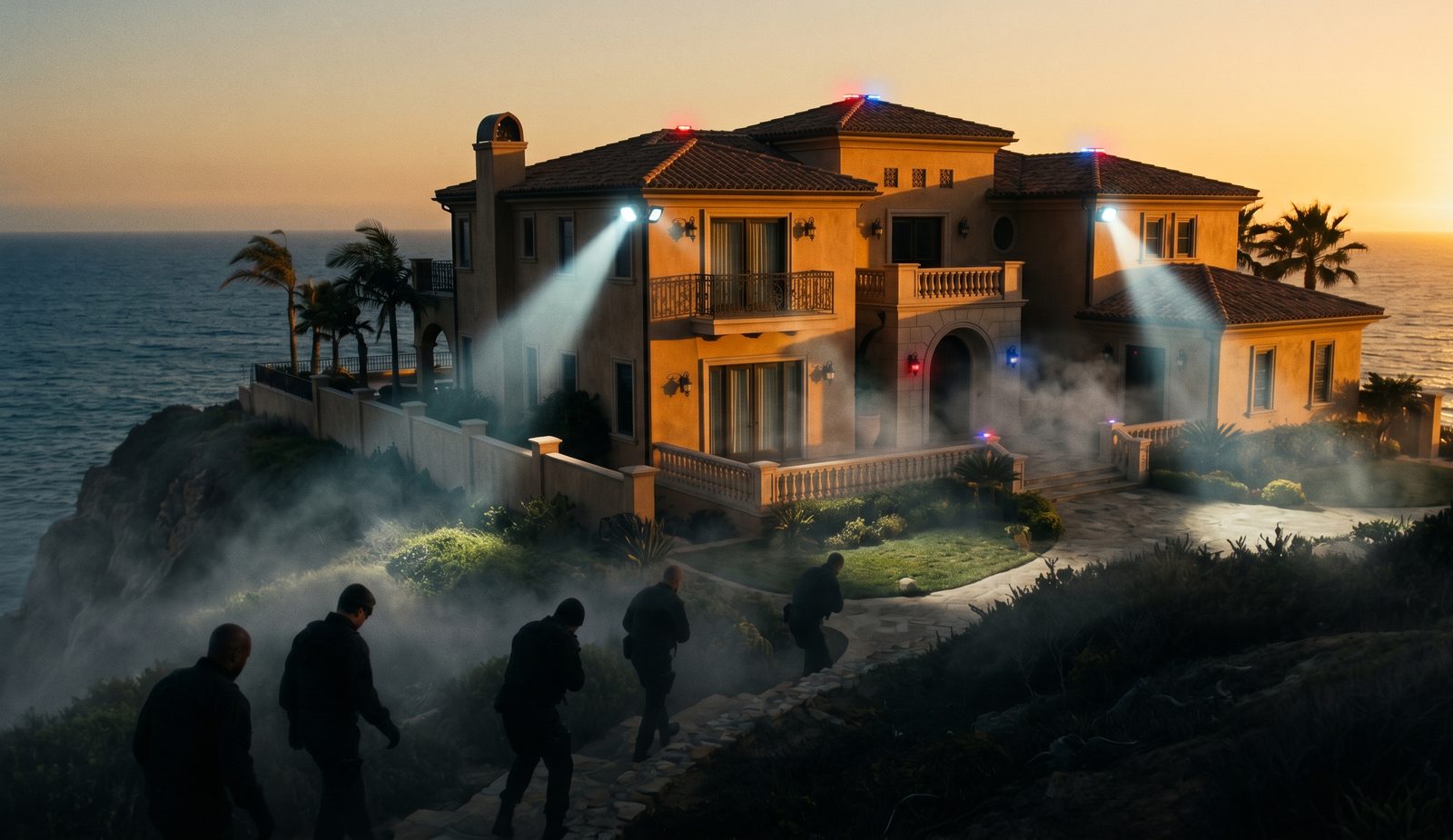
Classic alarm systems document break-ins – they do not prevent them. Our concept is therefore multi-stage and active: already on the property (Zone 4/3), approaches are detected, at the building envelope (Zone 2) they are actively repelled, and inside (Zone 1) every event is reliably documented. Continuously connected to a 24/7 monitoring centre that verifies alarms and, where necessary, immediately alerts the authorities – the decisive step within the 24–48-hour window of the new anti-squatter law.
Which specific technical components make sense for your property always depends on the individual case: usage profile, location, access routes, legal framework, existing infrastructure. You will find further insight into the overarching protection concept on our materials page as well as on the page on intrusion protection.

The following fields summarise our work at a high level. For good reasons, the technical implementation remains reserved for personal consultation.
Unobtrusive sensor technology detects approaches and attempts to enter even before the building is reached – at a stage when the law can still be clearly applied in favour of the owner.
No signal reaches the police unchecked. Our monitoring centre verifies every incident by video or photo comparison – essential to avoid false alarms and indifference from the authorities.
Where legally permitted, active deterrent components are used that cause intruders to retreat before an occupation can even be “stabilised”. We only discuss the details in person.
Every incident is documented in a GDPR-compliant and court-admissible manner. This shortens subsequent proceedings and strengthens the evidentiary situation – even in complex inquiokupa cases, where the formal chain of evidence is decisive.
Owners based in Germany retain control over their property in Spain – with predefined escalation paths, local contacts and automated status reports.
In the inquiokupa field, prevention is more than technology. We work with partners to vet tenants and structure contracts so that owners retain their legal capacity to act in an emergency.
Personal consultation: Which components make sense for your property, which legal frameworks apply and what a discreet implementation looks like in practice – we will gladly discuss this with you, without obligation and in confidence. Get in touch now or request a free security analysis.