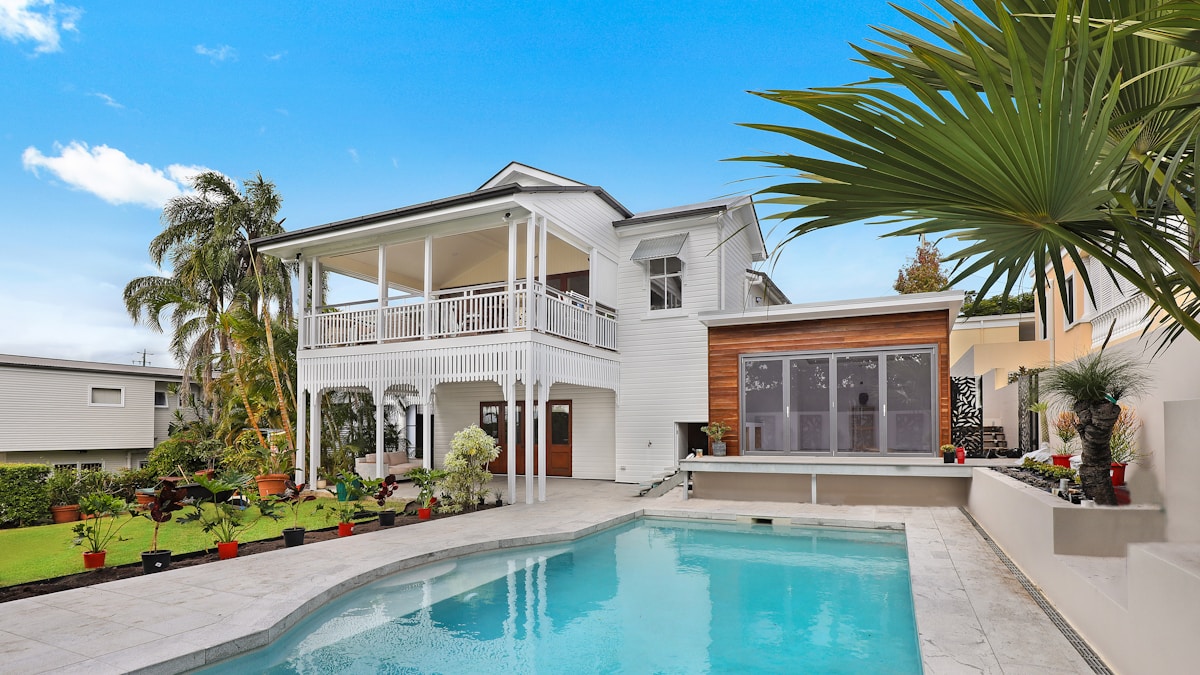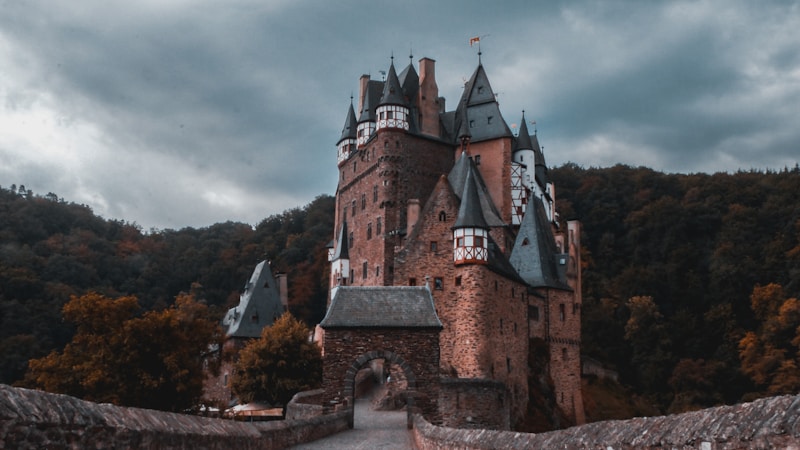
Imagine your home as a medieval castle. No attacker could approach the walls unnoticed, because even hundreds of metres away a watchman would raise the alarm. This is precisely the principle underlying the zone protection concept developed by Protexium Security for modern residential and commercial properties. Instead of relying solely on a front door with a lock, we stagger protection across four concentric security zones – each with a clear task and its own technologies.
In this article we explain step by step how the 4-zone concept works, what technology lies behind each zone and why this approach demonstrably drives the burglary rate towards zero. Whether you wish to protect your single-family house or your commercial property, the castle principle can be applied to any building.
The castle metaphor – why a medieval strategy still works
A medieval castle was never built so that its entire defence was concentrated on a single wall. Instead, several rings of defence were laid out: moat, outer ward, curtain wall and finally the keep as the impregnable final refuge. Each layer had a function – to delay, detect, repel, protect.
Modern security technology follows exactly the same principle. A single lock on the front door offers as little protection as a castle without a watchtower. Only the combination of several layers of defence makes a security concept truly effective. The zone protection concept of Protexium Security translates this proven strategy into the language of the 21st century: with sensors instead of watchmen, with algorithms instead of crossbow bolts and with security fog instead of murder holes.
Crucially, each zone responds automatically and in real time. Whereas in times past a watchman might have fallen asleep, modern security technology works reliably around the clock – 365 days a year, 24 hours a day. And that is what makes the difference between a theoretical sense of security and genuine, measurable protection.
Zone 4: The watchtower – early warning at 300 metres
The outermost defensive zone begins far from your property. Zone 4 forms the digital watchtower of your security system and monitors a radius of up to 300 metres around your premises. High-resolution outdoor cameras with AI-based movement analysis are used here. These cameras reliably distinguish between a passer-by, a passing animal and a person deliberately approaching your property.
Early warning is perhaps the most important aspect of the entire concept. The earlier a potential burglar is detected, the more time there is for an appropriate response. Zone 4 gives you precisely this lead time. As soon as the system detects a suspicious movement pattern, you are notified via your smartphone – including a live image. At the same time, recording is started and the system enters a state of heightened alert.
The technology used includes wide-angle cameras with night vision, thermal sensors for detection in complete darkness and intelligent algorithms that distinguish between normal and anomalous movement patterns. False alarms caused by animals, vehicles or weather phenomena are reduced to a minimum by photo verification.
“The best protection is the one that intervenes before the burglar even sets foot on your property. Zone 4 makes precisely that possible.”
Zone 3: The alerting – real-time response in seconds
Should an intruder cross the outer zone and set foot on your property, Zone 3 takes effect – real-time alerting. This zone covers the immediate grounds around your property: garden, driveway, terrace and all entry points. High-precision sensors register every movement and trigger a multi-stage alarm chain within seconds.
The alerting in Zone 3 is deliberately designed in stages. In the first step the intruder is made aware by an acoustic announcement that they are in a monitored area and are being recorded. According to police experience, this measure alone deters over 60 percent of all burglars. At the same time, a notification is sent to the occupants and to a professional alarm receiving and service centre (ARC).
The monitoring centre verifies the alarm using live images and audio data. If a genuine burglary attempt is confirmed, the police are alerted immediately and the next security levels are activated. This process typically takes less than 30 seconds – a decisive advantage over conventional alarm systems, where nothing often happens for minutes on end.
Zone 3 makes use of, among other things, the following technologies:
- Shock sensors on doors, windows and gates
- Infrared motion detectors with anti-masking function
- Magnetic contacts on all opening points
- Glass-break detectors for real-time detection
- Acoustic warning systems with personalised messages
Zone 2: The protective shell – active defence with CS gas
Zone 2 is the area in which the Protexium system perhaps most clearly reveals its difference from conventional alarm systems. Because whereas traditional systems merely trigger an alarm in the event of a burglary and wait for the police, Protexium goes one step further: the property actively defends itself.
Zone 2 forms the immediate protective shell around the building – comparable to the curtain wall of a castle. As soon as an intruder attempts to breach the building envelope, active defence mechanisms are triggered. The centrepiece is the CS gas module, which renders the interior impossible for the intruder to enter within seconds.
CS gas is a security-grade irritant gas approved for use in security technology, which immediately causes the intruder watering eyes, coughing and disorientation. The effect is temporary and medically harmless, but it makes any further activity in the room impossible. The CS gas module is activated exclusively after a verified alarm and only when the occupants are absent – intelligent control ensures that there is no risk whatsoever to residents or pets.
The active defence is complemented by further measures: high-frequency acoustic sirens in excess of 110 dB, strobe lighting to disorient the intruder and immediate video recording in HD quality for subsequent criminal prosecution.
All active defence mechanisms are triggered exclusively by the monitoring centre or, automatically, only after multi-stage verification. Accidental activation is ruled out by the multi-stage security system. Learn more on our page about intrusion protection with active defence.
Zone 1: The keep – security fog as the last bastion
The keep was the final refuge of a medieval castle – a massive tower in which the occupants could still feel safe even when all outer lines of defence had fallen. Zone 1 of the Protexium concept performs a similar function: it protects the most valuable areas of your property with the most effective technology available.
The central element of Zone 1 is the security fog. Within just 10 to 15 seconds, a dense, opaque fog is generated that fills the entire room. Visibility afterwards is less than 30 centimetres – a burglar can neither see valuables nor orient themselves. The fog is medically entirely harmless and leaves no residues on furniture, clothing or electronics.
The effectiveness of security fog is scientifically proven and is recommended by police authorities across Europe. In combination with the CS gas from Zone 2, a virtually insurmountable barrier is created. Even determined burglars generally give up immediately when confronted with these measures – the psychological effect is enormous.
Zone 1 typically protects the most sensitive areas of a property:
- Strongrooms and storage for valuables
- Server rooms and IT infrastructure
- Bedrooms and children’s rooms (with occupants present, no fog activation but alerting)
- Offices with sensitive documents
- Art and collection rooms
The interplay of the four zones
The true strength of the zone protection concept lies not in the individual zones but in their perfect interplay. Each zone builds on the previous one and raises the pressure on a potential intruder exponentially. Let us look at the typical course of a burglary attempt on a Protexium-protected property:
Second 0: an intruder approaches the property. Zone 4 detects the suspicious movement pattern and starts recording. The occupant receives a push notification with a live image.
Second 15: the intruder steps onto the property. Zone 3 activates the acoustic warning: “Attention, you are in a monitored area. The police have been alerted.” At the same time, the monitoring centre is notified.
Second 30: the monitoring centre verifies the alarm via live video and alerts the police. The active defence in Zone 2 is prepared.
Seconds 45–60: should the intruder attempt to enter the building, CS gas and security fog are activated. The room becomes inaccessible within 15 seconds. The burglar flees – if they have not already been deterred by the acoustic warning.
Statistically, over 95 percent of all burglary attempts do not get beyond Zone 3. The mere existence of visible surveillance combined with a direct warning is enough in the vast majority of cases to put offenders to flight. However, for the remaining five percent – the professional and particularly brazen burglars – zones 2 and 1 stand ready.
Why a zone concept is indispensable – figures and facts
The necessity of a well thought-out security concept is impressively confirmed by the current crime statistics. The Police Crime Statistics (PKS) from Germany’s Federal Criminal Police Office and data from the K-Einbruch.de initiative paint a clear picture:
The last figure in particular is remarkable: almost half of all burglary attempts fail – predominantly thanks to technical security measures. That means in turn: anyone who invests in professional security technology drastically reduces their burglary risk. According to BKA statistics, the likelihood of a successful burglary is over 80 percent lower for properties with an alarm system than for unprotected buildings.
A pure zone concept goes even further: through the staggered defence, not only is the burglary itself prevented, but the attempt is nipped in the bud. This not only reduces the risk of damage, but also lessens the psychological burden that a burglary – or even merely an attempted one – leaves on those affected.
Studies by the Criminological Research Institute of Lower Saxony show that over 70 percent of burglary victims still suffer months after the event from feelings of anxiety, sleep disturbances or a sense of insecurity in their own home. An effective security concept therefore is not only material protection but also a contribution to quality of life and mental health.
Conclusion: security begins long before the front door
The zone protection concept by Protexium Security is more than an alarm system – it is a security philosophy. By staggering protection across four zones, we create a system that deters, detects, alerts and – in the most extreme case – actively repels burglars at every stage. The castle metaphor is not a mere marketing concept but reflects a proven defensive strategy that has worked for centuries.
If you are thinking about professionally securing your property, we recommend an individual security analysis. Every property is different – and that is precisely why every security concept must be tailored individually. Our security consultants analyse your property, identify vulnerabilities and develop a bespoke zone concept that matches your requirements and budget precisely.
Book your free security analysis today and discover how your home can become an impregnably protected castle. Further information can be found on our page about intrusion protection with active defence or on the page for residential clients.